
Knowledge & Tradition
What is ceremonial cacao?
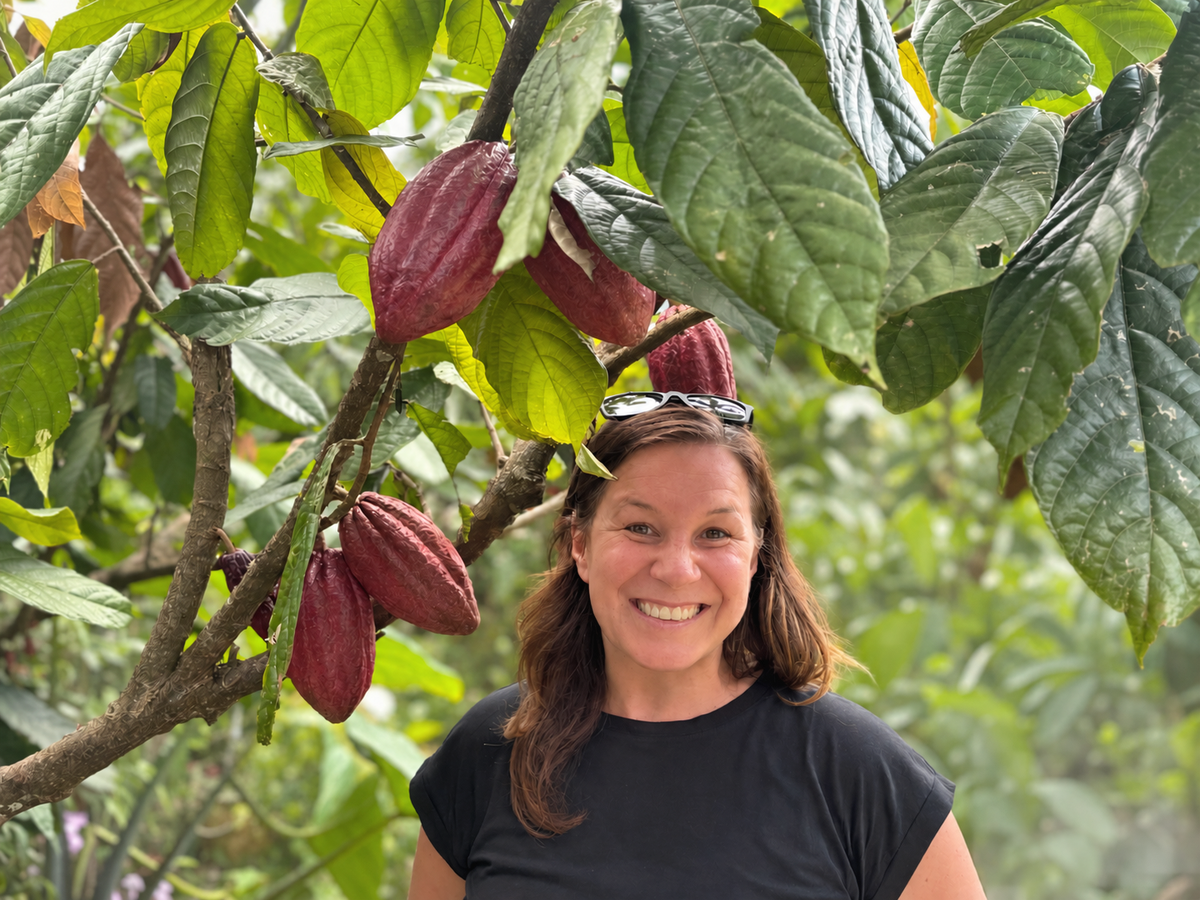
Ceremonial cacao is the whole, ground cacao bean: 100% cacao mass, no additives, no defatted powder. It has been enjoyed in Central and South America for thousands of years – in everyday life and on special occasions. Here you'll learn what's in it, how to prepare it and how our origins differ.
Preparation
How we drink it
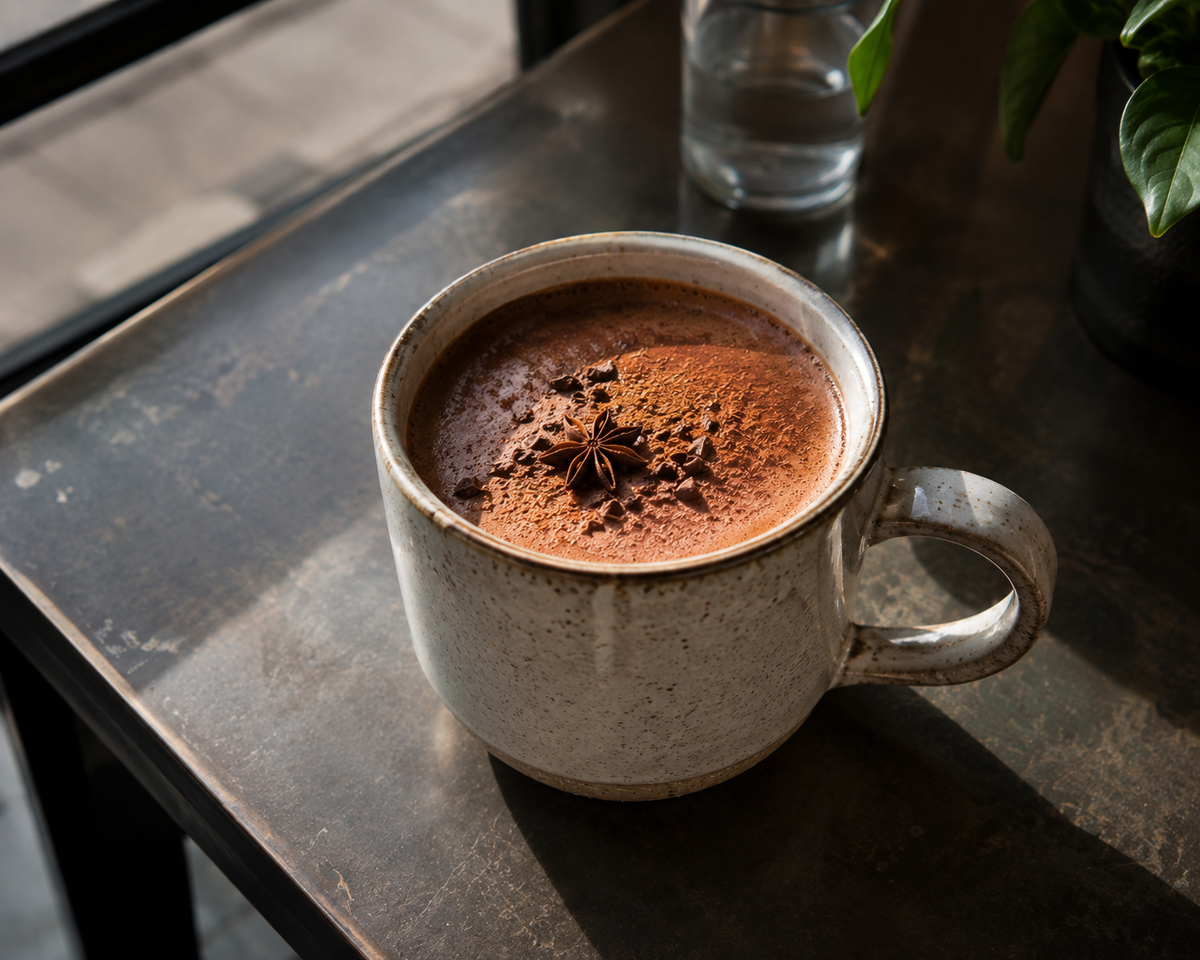
An everyday serving is about 15–20 g, a ceremonial serving for special occasions about 35–40 g.
A short moment of calm before the first sip – even on an ordinary day.
The difference
Ceremonial cacao vs. cocoa powder
To make cocoa powder, cacao mass is pressed and most of the cocoa butter is removed. What remains is a low-fat powder that is often also alkalised so it tastes milder and dissolves more easily.
Ceremonial cacao, by contrast, is the complete cacao mass: the beans are fermented, gently roasted, shelled and ground. All of the cocoa butter is retained – it makes up about half of the weight. The result: a full-bodied drink with a creamy texture and the aroma of its origin.
Ingredients
What's in cacao
Alkaloids
Theobromine & caffeine
Read moreFibre & minerals
Magnesium, iron, zinc, potassium
Read morePolyphenols & antioxidants
Flavanols & procyanidins
Read moreResearch & tradition
Anandamide, PEA & ceremony
Read moreTheobromine & caffeine – the alkaloids of the cacao bean
The most important alkaloid in cacao is theobromine – its name means “food of the gods”. Cacao also contains a smaller amount of caffeine.
According to laboratory analysis, our ANANDA contains approx. 900 mg theobromine and approx. 166 mg caffeine per 100 g; our other origins are in a similar range. An everyday serving of 20 g therefore contains approx. 180–190 mg theobromine and approx. 30–35 mg caffeine – a cup of filter coffee contains about 80–100 mg caffeine. If you are sensitive to caffeine, keep this in mind when choosing your amount.
Fibre
Because ceremonial cacao is made from the whole bean, all of its fibre is retained. Depending on origin, our cacaos contain 10.5–14.5 g of fibre per 100 g and are therefore high in fibre – for comparison, rolled oats contain around 10 g.
An everyday serving of 20 g provides about 2–3 g of fibre. With defatted cocoa powder or sugary drinking chocolate, this amount per cup is usually much lower.
Minerals
Cacao mass is naturally rich in minerals. According to laboratory analysis, our ANANDA is high in magnesium, iron, zinc and potassium – here are the values at a glance, plus theobromine:
| per 100 g | ANANDA | % Reference intake* |
|---|---|---|
| Magnesium | 280 mg | 75 % |
| Iron | 6,0 mg | 43 % |
| Zinc | 4,4 mg | 44 % |
| Potassium | 900 mg | 45 % |
| Theobromine | 900 mg | – |
* Reference intake of an average adult (8,400 kJ / 2,000 kcal). There is no reference intake for theobromine.
Transparency matters to us with cadmium too, which occurs naturally in cacao: the EU maximum level for cacao mass is 0.80 mg/kg, our ANANDA is at 0.45 mg/kg.
Polyphenols & antioxidants
Cacao beans contain a wide variety of polyphenols. These secondary plant compounds mainly include flavanols such as epicatechin as well as procyanidins – substances that research classifies as antioxidants. They are also responsible for the bitter, slightly astringent taste of pure cacao.
How much of them ends up in your cup depends strongly on processing: fermentation, roasting and above all alkalisation, which is common for many cocoa powders, break down flavanols. Ceremonial cacao is not alkalised and is processed gently.
Other components
Cacao also contains protein (14–15.5 g per 100 g in our cacaos) with all amino acids, including tryptophan, as well as the fats of cocoa butter, which make up about half of the cacao mass. The cocoa butter gives the drink its creamy texture and carries many of the aroma compounds.
Anandamide & PEA – what research says
Substances such as anandamide and phenylethylamine (PEA) have also been detected in cacao. They are often cited as an explanation for the special atmosphere of a cacao ceremony. However, the evidence is thin: the amounts contained are small, and a later study found considerably less anandamide than the first one. Whether these substances have any effect when drinking cacao has not been scientifically proven – we think it's more honest to say so.
In tradition
In cacao ceremonies, cacao is traditionally described as “heart-opening”. For the Maya and Aztecs it was a drink, an offering and a currency all at once. What a cup of cacao means to you is up to you.
Hundreds of components in one bean
Cacao is one of the most chemically complex foods there is. Often more than 300 components are mentioned – in the aroma alone, researchers have identified several hundred volatile compounds, plus alkaloids, polyphenols, minerals, amino acids and fats. Soil, climate, variety and fermentation shape which of them unfold – that's why a cacao from Madagascar tastes so different from one from Peru. It is precisely this diversity that has made cacao a special food for thousands of years.
Sources
Theobromine, caffeine, minerals, cadmium: Laboratory analysis of ANANDA; values for the other origins estimated
Fibre, protein: Nutrition information of our products
Reference intakes: Regulation (EU) No 1169/2011, Annex XIII
Cadmium maximum level: Regulation (EU) 2023/915
Anandamide (first detection): di Tomaso et al., Nature 382 (1996)
Anandamide (follow-up study): Di Marzo et al., Nature 396 (1998)
Our origins
Five cacaos compared
| Cacao | Origin | Variety | Character |
|---|---|---|---|
| ANANDA | Piura, Peru | Criollo Blanco | Gentle. Opening. Balancing. |
| HATI | Bali, Indonesia | Criollo, Trinitario, Forastero | Inspiring. Grounding. Alive. |
| SOMA | Sambirano Valley, Madagascar | Criollo, Trinitario | Deep. Round. Noble. |
| SELVA | San Rafael, Colombia | Criollo, Trinitario | Strong. Earthy. Vibrant. |
| PINTA | Putumayo, Colombia · wild cacao | Wild-grown | Strong. Earthy. Vibrant. |
FAQ
Frequently asked questions
What is ceremonial cacao?
Ceremonial cacao is 100% cacao mass: whole cacao beans are fermented, gently roasted, shelled and ground into a solid mass. Nothing is added and nothing is removed – no added sugar, no milk powder, and all of the cocoa butter is retained. The name comes from Central and South America, where cacao has been drunk at ceremonies and in everyday life for thousands of years. Today the term mainly stands for high-quality, unprocessed cacao meant for drinking.
How is it different from cocoa powder and drinking chocolate?
Cocoa powder is pressed cacao mass from which most of the cocoa butter has been removed. It is often alkalised so it tastes milder and dissolves better. Drinking chocolate and instant cocoa usually consist largely of sugar, milk powder and flavourings. Ceremonial cacao, on the other hand, is the whole cacao bean with all its cocoa butter – which is why it is creamier, more intense in flavour and shows the character of its origin.
How do I prepare ceremonial cacao?
Chop or grate 15–20 g of cacao – 35–40 g for a ceremonial serving – and put it in a pan with approx. 250 ml of water or plant-based milk. Warm gently to no more than 60 °C and whisk until the cacao has completely melted and is creamy. A milk frother or hand blender makes it especially velvety. Sweeten to taste, for example with coconut blossom sugar, and refine with cinnamon, chilli, cardamom or a pinch of salt.
Why not above 60 °C?
Cocoa butter melts at around 35 °C – no more heat is needed. At a gentle temperature the cacao stays creamy and its aroma stays round. If it gets too hot or even boils, it can turn bitter and the delicate fruity notes of its origin are lost. In addition, sensitive plant compounds such as polyphenols can break down when heated strongly – gentle warming preserves them.
How much cacao per cup?
For an everyday cup we recommend 15–20 g per approx. 250 ml. For a more intense cup on special occasions, for example at a cacao ceremony, use 35–40 g. It's best to start slowly: everyone experiences cacao differently, and the right amount is the one that feels good to you.
Does cacao contain caffeine? How much compared to coffee?
Yes. Cacao contains caffeine, but considerably less than coffee. An everyday serving of 20 g of our cacao contains approx. 30–35 mg of caffeine, a 40 g serving approx. 60–70 mg. A cup of filter coffee contains about 80–100 mg. If you are sensitive to caffeine, keep this in mind, especially in the evening.
What is theobromine?
Theobromine is the most important alkaloid of the cacao bean and is chemically related to caffeine. Its name means “food of the gods” – after the botanical name of the cacao tree, Theobroma cacao. A cup made with 20 g of our cacao contains approx. 180–190 mg of theobromine.
With water or with milk?
Both work. With water the cacao tastes more bitter and intense, and the aromas of its origin come through especially clearly. With plant-based milk it becomes creamier and rounder – our favourite is pea milk. Try both and find your favourite.
Is your cacao vegan and gluten-free?
Our cacaos consist of 100% cacao mass and contain no animal ingredients – so they are vegan. Cacao is naturally gluten-free. We also decorate the PINTA Ceremonial Disc with a dried pansy blossom; it is vegan too.
What is a cacao ceremony?
A cacao ceremony is a shared moment in which cacao is drunk consciously – often combined with music, silence, breathing exercises or conversation. There are no fixed rules. You can experience it yourself at our now.here Space in Berlin-Kreuzberg and at our MEDICINE MUSIC evenings. At home, a cup of cacao and a few minutes of calm without your phone is all it takes.
How do your origins differ?
Every origin tastes different because variety, soil, climate and fermentation shape the cacao. ANANDA from Peru is gentle and creamy, HATI from Bali complex and warm, SOMA from Madagascar deep and round with fruity notes. SELVA and PINTA from Colombia are stronger and earthier – PINTA comes from wild-growing trees in the Amazon. Our tasting set with three origins is a great way to get to know them.
Who is ceremonial cacao not suitable for?
We do not recommend ceremonial cacao for children or for pregnant and breastfeeding women, mainly because of its caffeine and theobromine content. If you take medication or are unsure, talk to your doctor first.
How do I store cacao and how long does it keep?
Store the cacao in a cool, dry place away from light, ideally in its resealable pouch. In warm conditions the cocoa butter can rise to the surface and form a whitish film – this is harmless and disappears when heated. You'll find the best-before date on the packaging.
Our cacaos
-
The Taster Bundle – Three worlds, one decision.
Regular price From €12,90 EURRegular price -
PINTA Ceremonial - limited edition - Colombia
Regular price €9,90 EURRegular price -
PINTA Cacao - limited edition - Colombia
Regular price €24,90 EURRegular price -
SELVA Cacao - limited edition - Colombia
Regular price €22,90 EURRegular price


